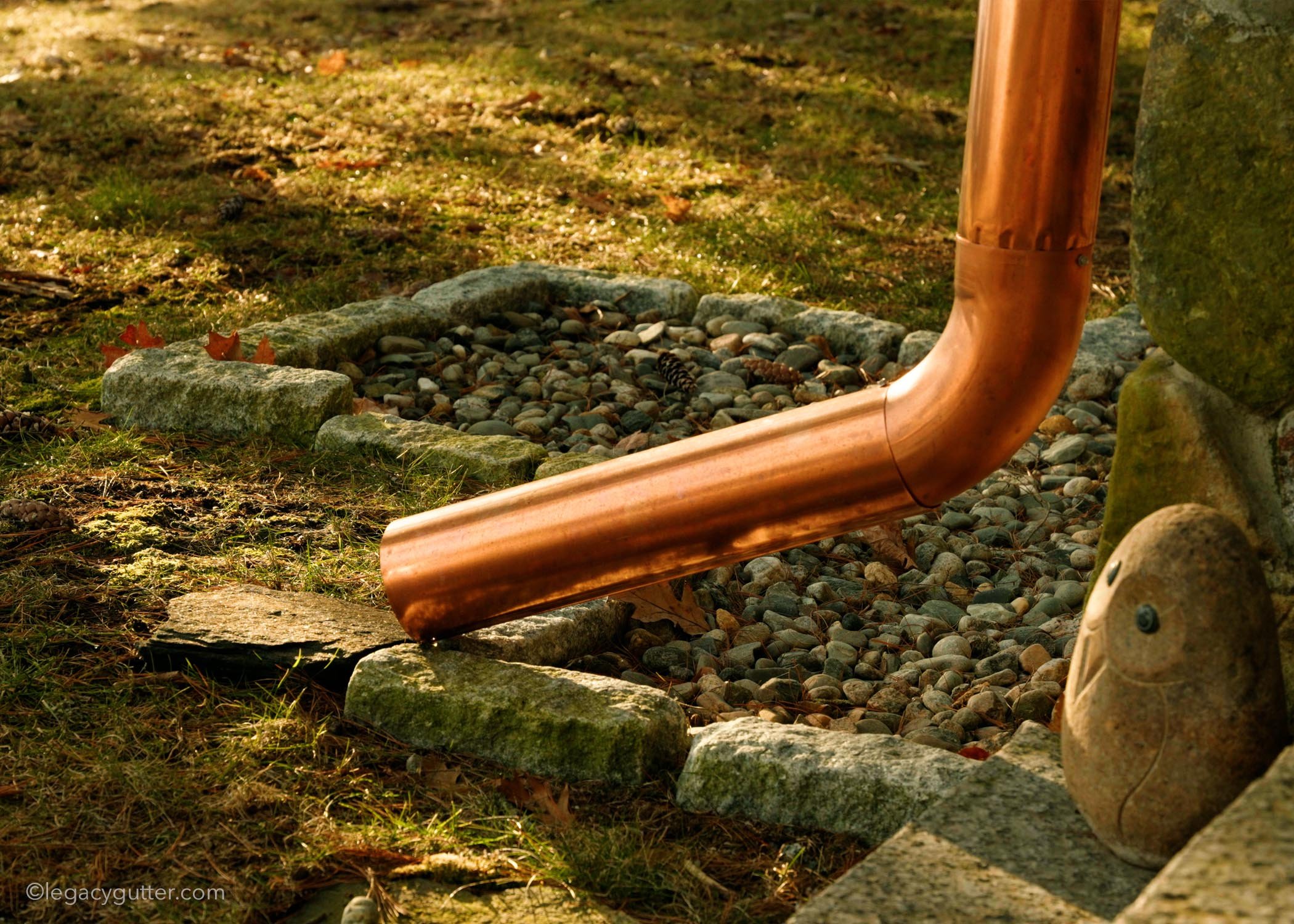
Winter in the Monadnock region and on the Seacoast is beautiful. It is also tough on your home. Most people think about the gutters on the roofline, but the downspouts do the quiet work of carrying all of that water down and away from your foundation. When a downspout freezes solid, that system stops working, and the water has to go somewhere.

Here is what causes frozen downspouts in New Hampshire and northern Massachusetts, how to spot trouble early, and what actually keeps water moving all winter.
Why Downspouts Freeze in New England Winters
A downspout freezes when water sits in it long enough for the cold to win. In our climate, that happens for a few common reasons:
Freeze-thaw cycles. Sunny afternoons melt snow on the roof, and the meltwater runs into the gutters and downspouts. When the sun goes down and temperatures drop, the water still inside freezes. Repeat that for a few days and the ice builds layer by layer until the pipe is blocked.
Debris inside the pipe. Leaves, pine needles, shingle grit and seeds collect at elbows and bends. That debris slows the water, and slow water freezes faster.
Small downspouts. Standard 2x3 downspouts have a narrow opening. It does not take much ice or debris to close one off.
Poor gutter slope. If the gutter does not pitch properly toward the outlet, water pools in the trough and feeds a steady trickle into the downspout instead of a clean flow.
Water that has nowhere to go at the bottom. A short elbow that dumps onto frozen ground or a snowbank backs up quickly. Once the bottom freezes, the ice climbs up the pipe.
Shaded, north-facing corners. Downspouts that never see sun stay frozen longer and are often the first to block up.
Warning Signs of a Frozen Downspout
You do not need to climb a ladder to catch most problems. Watch for these signs from the ground:
Icicles forming along the length of the gutter or at the seams, not just at the corners
Water spilling over the front of the gutter during a thaw
No water coming out of the bottom of the downspout on a warm, melting day
A downspout that looks swollen, split or pulled away from the wall
Ice building up on the ground, walkway or driveway near the downspout
Gutters sagging or pulling away from the fascia under the weight of ice
If you notice any of these, the system is not draining the way it should.
The Damage Frozen Downspouts Can Cause
A blocked downspout is not just an inconvenience. Water and ice that cannot drain create real problems:
Split or burst downspouts. Water expands as it freezes. Over time, that pressure can crack seams and split the pipe.
Gutter and fascia damage. Ice adds weight. Gutters loaded with ice can sag, loosen their hangers, or pull away from the fascia board.
Overflow at the roofline. When the downspout is blocked, the gutter fills up and overflows. That water can run down siding and behind trim.
Foundation and basement water. Overflow lands right next to the house instead of being carried away, which can lead to wet basements and soil erosion around the foundation in spring.
Dangerous ice on walkways. Water that spills near doors, steps and driveways refreezes into slick ice. (More on that in our post, Don't Slip - Protect Your Walkways This Winter.)
How to Prevent Frozen Downspouts
The best fix is a system that drains fully and quickly, so there is little water left to freeze. Here is what makes the biggest difference.
1. Keep the downspouts clear
Debris in an elbow is often where an ice blockage starts. Make sure downspouts are flowing freely before the deep cold sets in. If you can hear water gurgling or see it backing up during a rain, there is likely a clog.
2. Make sure the gutters have proper slope
Gutters should pitch toward each downspout so water moves instead of sitting. Pooling water in the trough leads to slow drips into the downspout, and slow drips freeze. A professional can check the pitch and re-hang sections that have settled.
3. Upgrade to larger 3x4 downspouts
This is one of the most effective upgrades for New England homes. A 3x4 downspout has a much larger opening than a standard 2x3, so it moves more water and is far harder for ice or debris to block. Legacy installs oversized downspouts as part of our overbuilt approach. (Read more in Why Overbuilt Gutter Systems Matter in New England Winters.)
4. Extend the discharge or go underground
Water needs a clear path away from the house. Downspout extensions carry water farther from the foundation so it does not pool and refreeze at the base. For some homes, ground-pipe drains that carry water to a safe spot in the yard are a cleaner, longer-term option. The right choice depends on your grading, soil and landscaping.
5. Add gutter guards
Guards keep leaves and needles out of the gutters and downspouts, which removes one of the main causes of blockages. Not all guards perform the same in snow and ice, so it pays to choose carefully. We break it down in Do Gutter Guards Actually Work?
6. Don't chip at the ice
If a downspout is already frozen, avoid hammering or chipping at it. That can dent or split the pipe and damage the gutter. Let it thaw, or call a professional.
When to Call a Pro
Some freezing is just New England weather. But if the same downspout freezes every winter, or you are seeing overflow, sagging gutters, split pipes or ice on your walkways, the system likely needs a fix rather than another season of hoping. Call a professional when:
A downspout freezes repeatedly in the same spot
Your gutters are sagging or pulling away from the house
You see cracks, splits or separated seams
Water is reaching your foundation or basement
You are thinking about upgrading to 3x4 downspouts, extensions, underground drains or guards
At Legacy Gutter Solutions, we look at the whole system: gutter size, slope, downspout size and placement, and where the water goes once it reaches the ground. Then we build it to handle real New England winters.
Frequently Asked Questions
Can I use a hair dryer or hot water to thaw a frozen downspout? We don't recommend climbing a ladder in icy conditions. The safest approach is to let the downspout thaw naturally, clear the discharge area at the bottom so meltwater can escape, and call a professional if it keeps happening.
Are 3x4 downspouts worth it? For most New England homes, yes. The larger opening moves more water and is much harder to clog or freeze shut than a standard 2x3 downspout.
Do gutter guards stop downspouts from freezing? Guards help by keeping debris out, which removes a common cause of blockages. They work best as part of a system with proper slope and well-sized downspouts.
Should my downspouts drain onto the driveway or walkway? Ideally, no. Water that drains across walking surfaces can refreeze into ice. Extensions or underground drains can move it somewhere safer.
Ready for a Winter-Ready Gutter System?
If your downspouts freeze every year, let's fix the cause. Legacy Gutter Solutions serves homeowners from Rindge and the Monadnock region to the Seacoast and northern Massachusetts.
Contact us today to schedule your design consultation.
Built to Last. Designed to Love. Guaranteed.