What happens to meltwater on a freeze-thaw cycle?
On a typical New England winter thaw, snow on the roof melts during the day and the water heads for the gutters, the downspouts and the ground. If it can't get all the way off the roof and away from the house before the temperature drops, it refreezes wherever it stalls: at the roof edge, in the gutter, inside a downspout, or on the walkway below. Some of that ice is a drainage problem. Some of it is a sign of heat escaping from the house, which gutters alone can't fix. Watching where the ice forms, from the ground, helps you tell the two apart.
Why are freeze-thaw cycles so hard on a roofline?
Our winters rarely stay frozen for long. A bright afternoon above freezing is often followed by a hard freeze that night. Each swing sends new meltwater down the roof, and each cold night locks some of it in place, layer by layer.
Where does meltwater stall and refreeze?
Think of the path water takes in four stops. Ice can form at any of them.
1. At the roof edge
The eaves hang out past the heated part of the house, so they are usually the coldest part of the roof. When snow melts higher up and the water reaches that cold edge, it can refreeze into a ridge. That is the classic ice dam.
Sun can melt roof snow on a bright afternoon. But University of Minnesota Extension notes that the heat behind ice dams primarily comes from the house, and only rarely from the sun. If your roof drips on cold, cloudy days, or snow disappears in patches while the rest stays covered, heat from below is a likely suspect. That is a question for an attic, insulation or roofing pro.
2. In the gutter
A gutter that is clogged, sagging or pitched the wrong way holds water instead of moving it. That water freezes in the trough, and the next thaw sends more water over the top. You may see water sheeting over the front edge and icicles hanging along the face of the gutter.
3. In the downspouts
Narrow or clogged downspouts, or ones that empty onto frozen ground, back up quickly. Once the bottom freezes, ice climbs the pipe. We covered this in detail in Frozen Downspouts: Why They Happen and How to Stop Them.
4. On the ground
Water that leaves the downspout still has to go somewhere. If it lands on a walkway, step or driveway, or pools at the foundation, it refreezes overnight. Department of Energy building-science guidance calls for downspouts to end at least 5 feet from the foundation. Our post Don't Slip: Protect Your Walkways This Winter looks at the walkway side.
How can you tell drainage ice from ice-dam ice?
The location of the ice is your best clue.
What you see: Ice in the gutter or downspout, water spilling over the front, roof surface mostly clear
What it often points to: Drainage: clogs, pitch, outlet size or downspout placement
Who to call: A gutter specialist
What you see: The same walkway, step or foundation corner icing over after each thaw
What it often points to: Drainage: where the downspout or overflow discharges
Who to call: A gutter specialist
What you see: A thick ridge of ice on the roof surface above the gutter
What it often points to: Heat reaching the roof: an ice dam
Who to call: A qualified roofer or insulation and air-sealing pro
What you see: Stains or damp spots on ceilings or upper walls after a thaw
What it often points to: Water backing up under the roofing
Who to call: A qualified roofer first
Often, both happen at once. A frozen gutter can add to ice at the roof edge, but it is not the root cause of an ice dam. Drainage and attic heat each deserve their own look.
What should you watch for on the next thaw?
You can learn a lot from a short check from the yard, the driveway or a window.
Mid-afternoon, while snow is melting:
Is water coming out of the bottom of every downspout?
Is water spilling over the front of any gutter section?
Where does the water go once it hits the ground?
That evening or the next morning:
Where did new ice form: walkway, steps, driveway or a corner of the foundation?
Is it the same spot as last time?
Inside, are there any new stains near exterior walls or around window frames?
Take photos from the same spot each time and note the date and weather. That gives a pro a head start.
Stay on the ground for all of this. Don't climb a ladder or a roof in icy conditions, don't chip at ice, and keep people and pets out from under icicles and roof edges, where falling ice can cause injuries. Part three of this series covers safer steps in more detail.
What can gutters do about freeze-thaw ice, and what can't they?
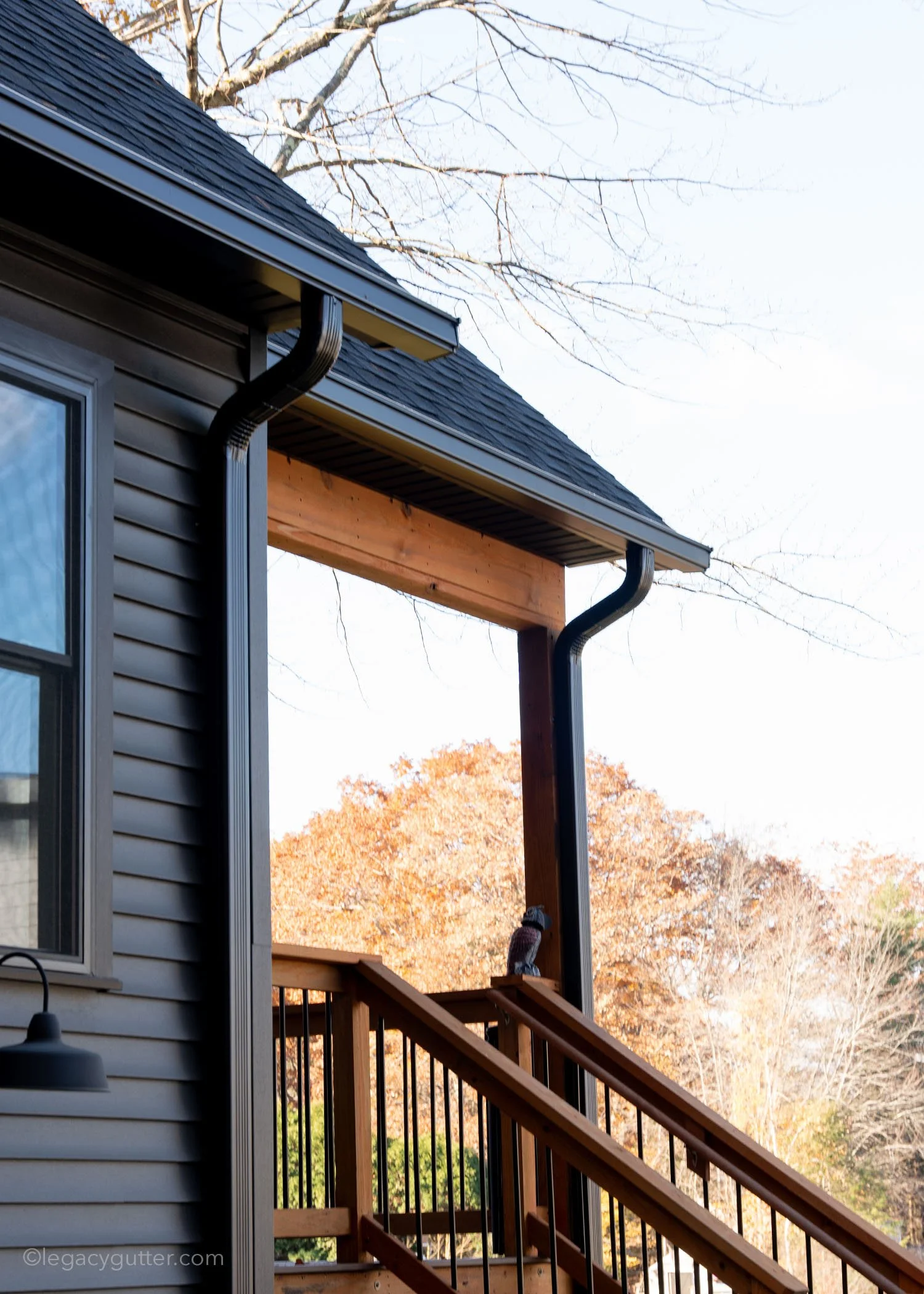
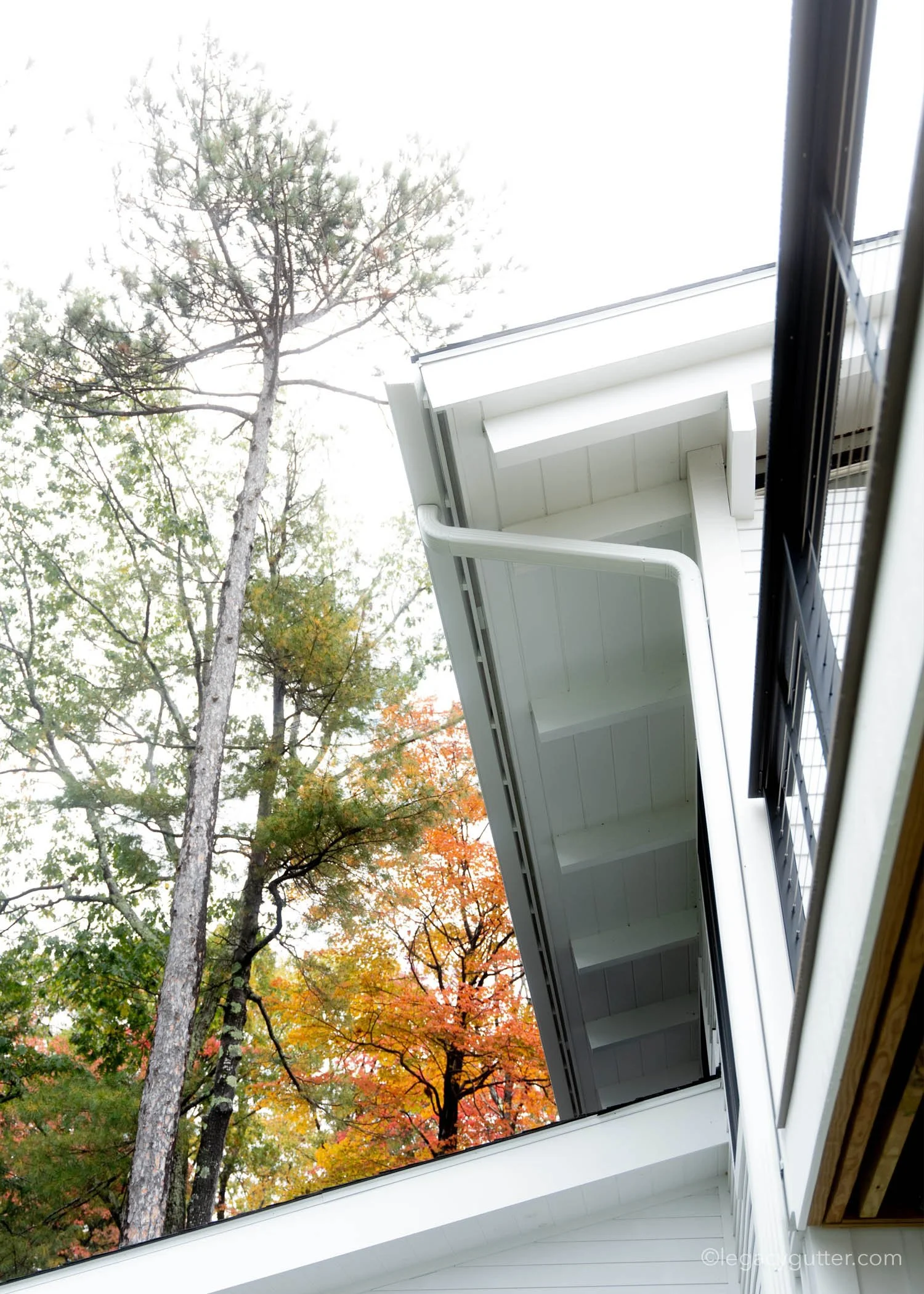
Gutters do not create ice dams. A well-built system gives meltwater a clear, fast path off the roof and away from the house whenever it can drain. That comes down to a few things:
Proper pitch toward each outlet, so water moves instead of sitting
Outlets and downspouts sized and placed so water leaves quickly
Discharge routed away from walkways and the foundation, with extensions or ground pipes where they fit the site
Strong hangers and a sound fascia behind the gutter to carry the weight of winter ice
At Legacy Gutter, our crew roll-forms seamless gutters on site to fit each run of the home. Our gutters are overbuilt for ice and snow loads, and we plan pitch, outlets and downspout routing so water has somewhere to go.
What gutters can't do is stop roof snow from melting when heat escapes from the house. New gutters alone do not fix attic heat loss, and in a long cold snap, any gutter can ice up. Ice and snow are part of a gutter's life in New England. The goal is a system built to handle them.
Frequently asked questions
Why does the same walkway ice over every night?
Usually, water from a downspout or an overflowing gutter section crosses it during the day and refreezes after sunset. Moving where that water discharges is a drainage question.
Will new gutters stop ice dams?
No, not on their own. A well-designed gutter system helps meltwater drain, but the heat that drives ice dams needs its own assessment by a qualified roofer, insulation professional or home energy auditor.
Key takeaways
On a freeze-thaw cycle, meltwater refreezes wherever it stalls: roof edge, gutter, downspout or ground.
Ice in gutters, downspouts and walkways usually points to drainage. A thick ridge on the roof or stains inside points to heat loss.
Watch from the ground on the next thaw, take photos, and call the right pro.
Gutters help water leave, but they don't solve attic heat loss on their own.
Request a Design Visit or call us at (603) 760-1927.